Opens the official listing with live dates and prices. Book there; nothing is charged on this site.
Area
Centro Histórico, Mexico City
Theme
Landmarks, memory & the unusual
From the top floors the whole basin opens up: the cathedral and the Zócalo on one side, the green sweep of Chapultepec on the other, and two snow-topped volcanoes on a clear morning. The Torre Latinoamericana went up in 1956, one of the first real skyscrapers raised on the soft old lakebed under Mexico City, and it has stood through every big earthquake since. This is an observation deck, not a museum, and the reason to come is the view and the building that holds it up.
What will you see from the Torre Latinoamericana?
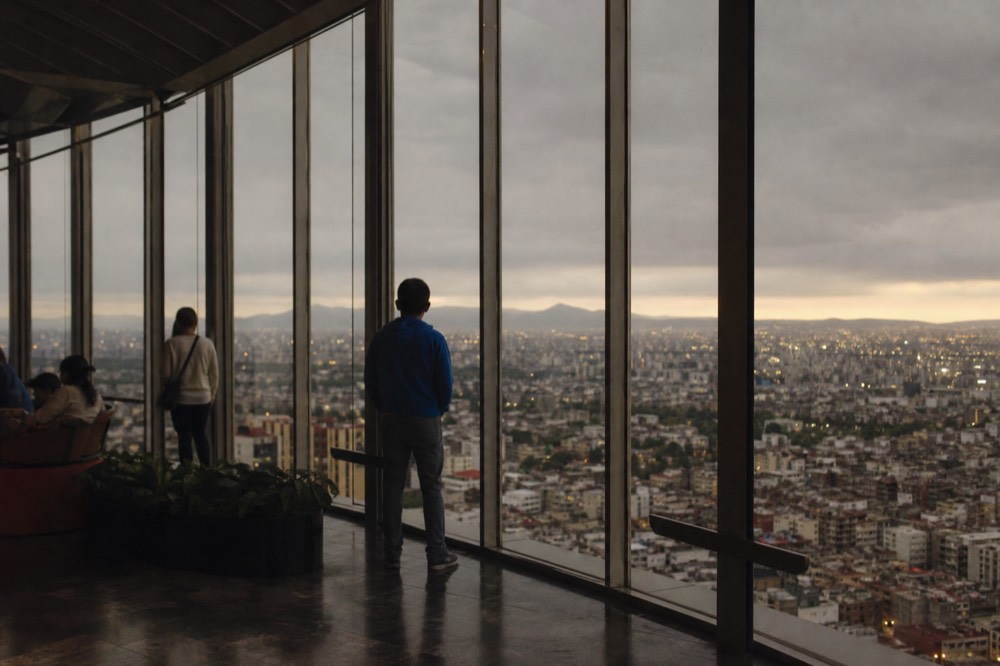
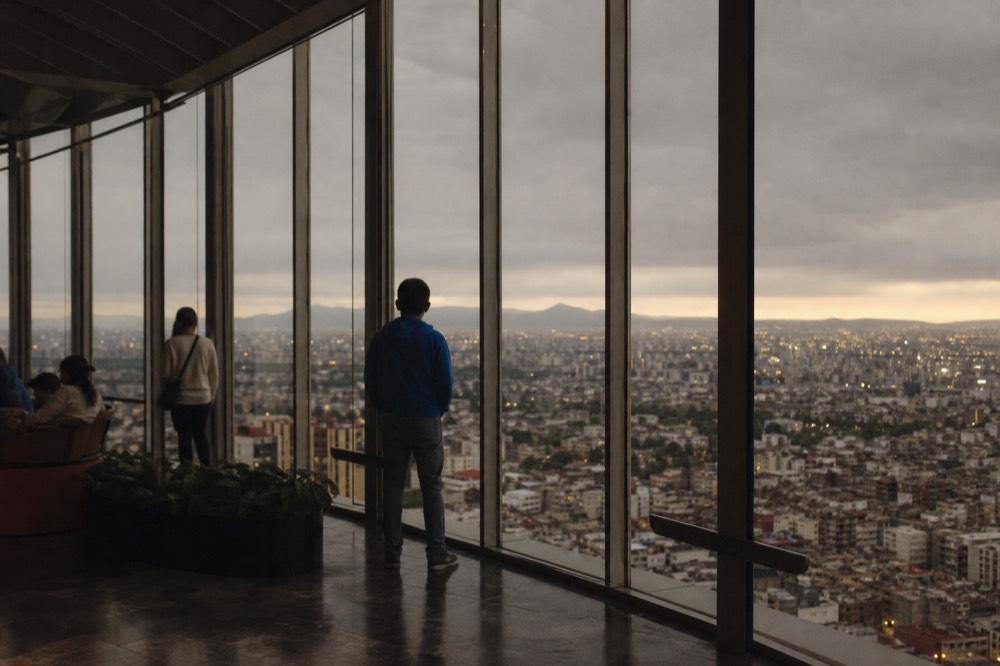
The draw is the panorama over the historic center: an open-air deck near the top, a glassed viewing floor just below it, and a couple of small extras on the way up. You look straight down onto the Palacio de Bellas Artes and the Alameda, east to the Zócalo, and out to the ring of mountains that closes the valley.
The 44th-floor deck is the headline. It is open to the air, wrapped in mesh, and it gives a full turn around the city with the streets of the Centro laid out like a map below. On a clear day, usually early morning or just after rain, Popocatépetl and Iztaccíhuatl stand on the southeastern horizon. By late afternoon the light softens and the whole grid starts to glow, which is why sunset is the busiest slot.
Lower down, a glassed floor gives the same view from behind windows if the wind is up, and there is a café and bar where you can sit with the skyline. A small history room and a little aquarium fill the floors on the way, more of a bonus than a reason to come. Plan on thirty to forty-five minutes for the deck itself, longer if you settle in for a drink.
The tower that outlasted the earthquakes
Mexico City sits on the drained bed of a lake, and that soft clay makes tall buildings a serious engineering problem. The Torre Latinoamericana was designed to ride it out, sunk on deep piles driven through the mud to firmer ground, and it became famous for standing through quakes that wrecked the blocks around it.
When it opened in 1956 it was the tallest building in Latin America, and few believed a tower that height could survive on ground this unstable. The engineer Leonardo Zeevaert worked out a foundation of long piles and a flexible steel frame meant to sway rather than snap. The design was tested sooner than anyone wanted. The 1957 earthquake damaged much of the center while the tower stood undamaged, and it did the same in 1985, when whole streets of buildings nearby came down.
That history is part of why the visit is more than a viewpoint. You are standing on a piece of engineering that changed how the city built upward, and the view carries more weight once you know it.
How does the Mirador observation-deck ticket work?
Admission to the Mirador is a single, inexpensive ticket, and booking a timed slot ahead lets you go straight up rather than queue at the ground-floor desk on a busy afternoon. The current price and available times sit on the booking panel above, which opens the live listing.
A pre-booked slot takes the guesswork out of peak times like sunset and weekends, when the lobby can back up, and it covers the observation levels and the small extras on the way. Note that there is no single official city museum pass in Mexico City, so this is bought as its own ticket; the tower turns up inside some third-party sightseeing bundles, but the deck admission on its own is the direct route.
One thing that sets the Torre apart from most sights here: it is open every day, Mondays included, when the big INAH museums across town are shut. That makes it a reliable Monday plan when Anthropology, Templo Mayor and the castle are closed.
Know before you go: hours, getting there and the best time
The tower stands at the corner of Eje Central and Avenida Madero, right across from the Palacio de Bellas Artes and the Alameda, in the heart of the Centro Histórico. Metro Bellas Artes and Metro San Juan de Letrán are both a short walk. It opens daily, including Mondays, and stays open well into the evening.
Timing decides the visit. Clear views are most likely early in the day or after rain has washed the haze out; smog can flatten the distance by mid-afternoon. Sunset is the popular pick and the deck fills up for it, so a booked slot helps. If you want the volcanoes, come in the morning. The deck is exposed, so a jacket is smart on a windy day.
At a glance
Detail
What it is
Observation deck, not a museum
Address
Eje Central at Av. Madero, Centro Histórico
Nearest metro
Bellas Artes and San Juan de Letrán, short walk
Open
Daily, including Mondays, into the evening
Time needed
30 to 45 minutes on the deck
Best time
Clear mornings for the volcanoes, sunset for the light
What to pair with the Torre nearby
You are steps from two of the best stops in the Centro Histórico. The Palacio de Bellas Artes is directly across the Alameda, and the Aztec ruins of Templo Mayor sit a short walk east toward the Zócalo. Both make an easy half-day around the tower.
Go up the Torre for the overview, then cross to Bellas Artes for the great mural cycle under its Art Deco dome, or walk east to Templo Mayor to stand over the excavated heart of Tenochtitlan. For the full picture of what else is close, our guide to mexico city museums lays every collection out by area and theme.
Questions people ask
Is the Torre Latinoamericana a museum?
No. It is an observation deck, or mirador, on the upper floors of a 1956 skyscraper, and the reason to visit is the view over the historic center. There are a small history room and a little aquarium on the way up, but the tower is an attraction rather than a museum.
Is the Torre Latinoamericana open on Mondays?
Yes. It opens every day, Mondays included, and stays open into the evening. That makes it a dependable plan on a Monday, when most of the city's big INAH museums, including Anthropology, Templo Mayor and Chapultepec Castle, are closed.
How much is a Torre Latinoamericana ticket?
Admission to the Mirador is a single, low-cost ticket. The current price and the available time slots are shown on the booking panel above, which opens the live listing where you book.
When is the best time to go up the Torre Latinoamericana?
Come early in the day or just after rain for the clearest views, when the volcanoes are most likely to show on the horizon. Sunset gives the best light but draws the biggest crowd, so a timed slot helps then.
How long do you need at the Torre Latinoamericana?
Thirty to forty-five minutes covers the observation deck comfortably. Allow longer if you want to sit with a drink at the top bar or take in the small aquarium and history room on the way up.
Centro Histórico, Mexico City · Genocide history and human-rights galleries
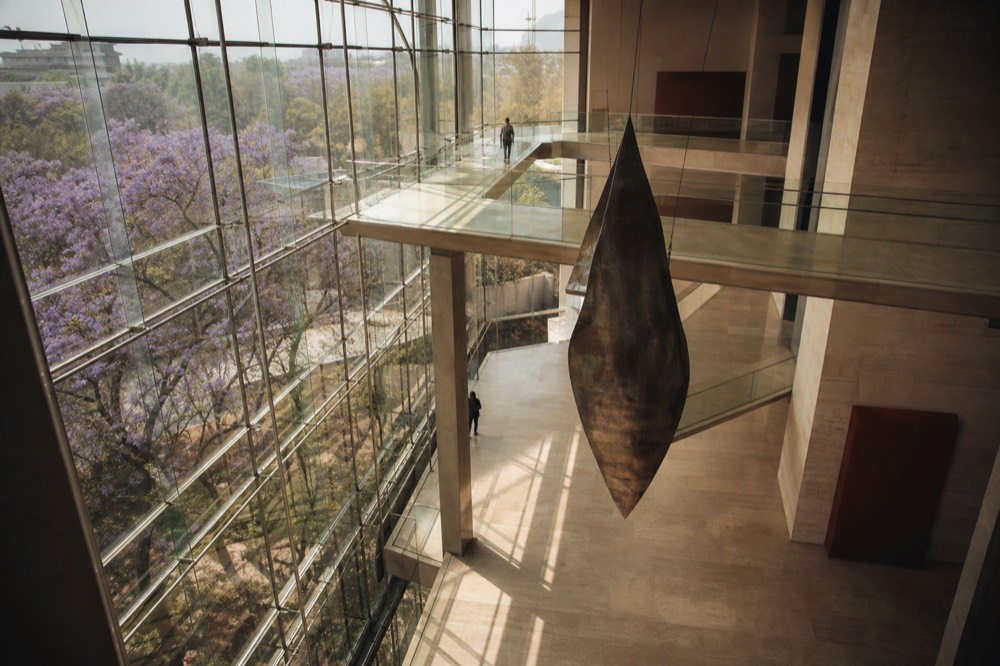
A museum near the Alameda that walks through the genocides of the twentieth century and into human rights, tolerance and memory. Serious and affecting rather than a quick stop, and the best-rated of the ticketed museums here.
Bosque de Chapultepec, Mexico City · A hands-on science museum built for kids
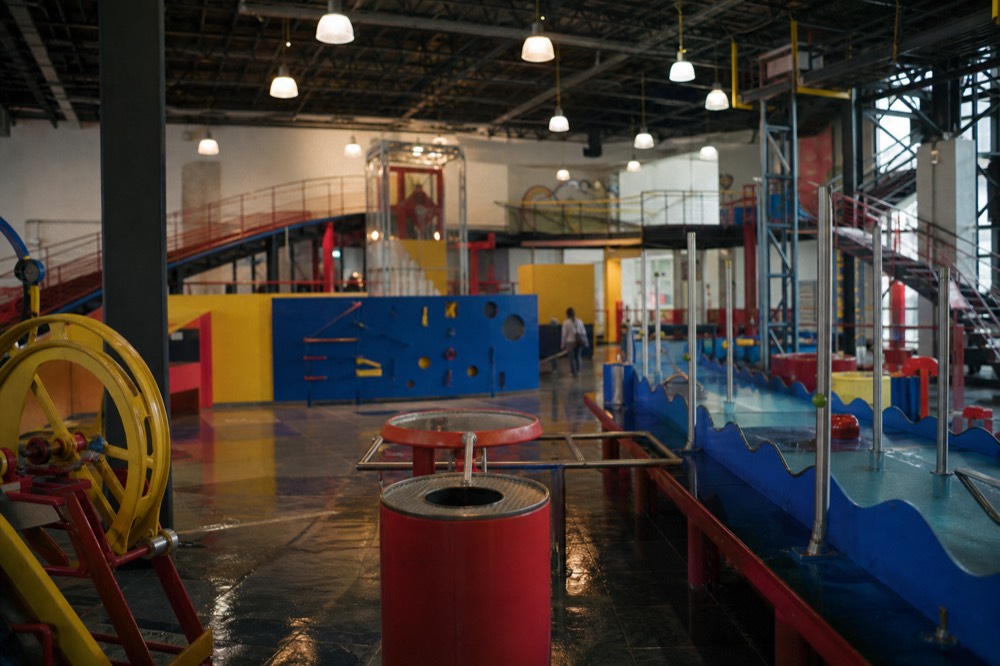
A hands-on children's museum in the second section of Chapultepec, built around touch-everything science, technology and play. Aimed squarely at families with kids. Admission is by package; closed Mondays.
Roma Norte, Mexico City · Design and everyday objects in a Roma mansion
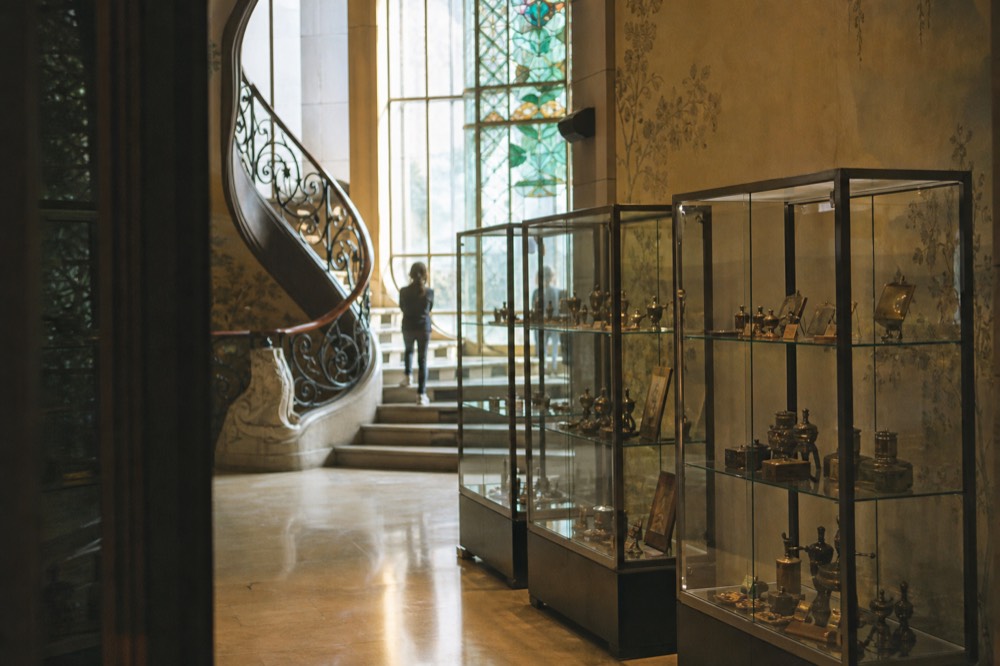
A design museum in a restored Roma Norte mansion built on Bruno Newman's collection of everyday objects, packaging, advertising and graphic art from two centuries. Small, specific and fun. Usually open Wednesday to Sunday; low admission.