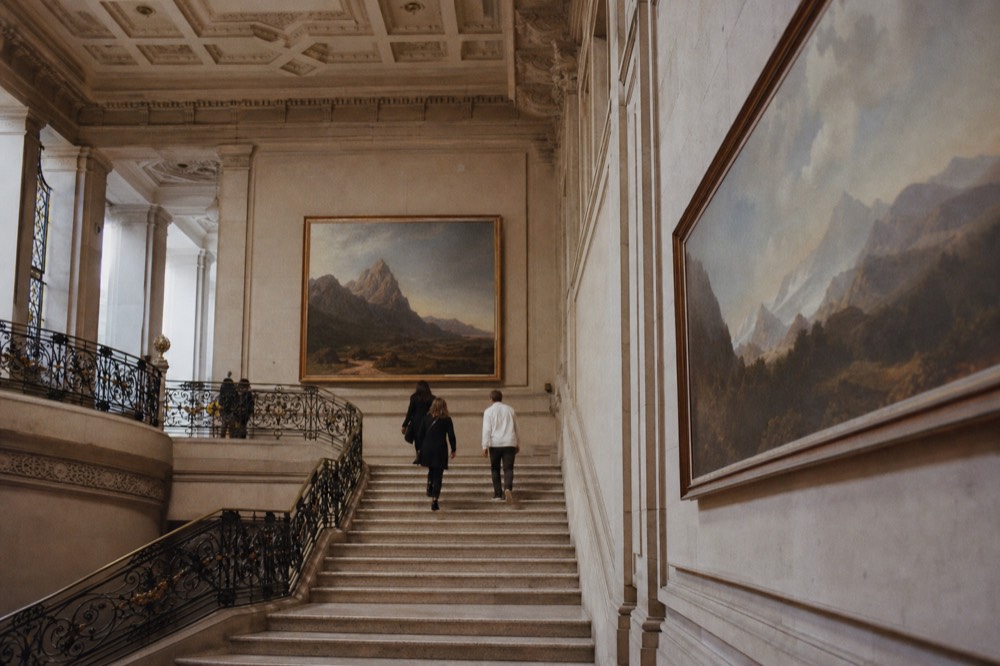
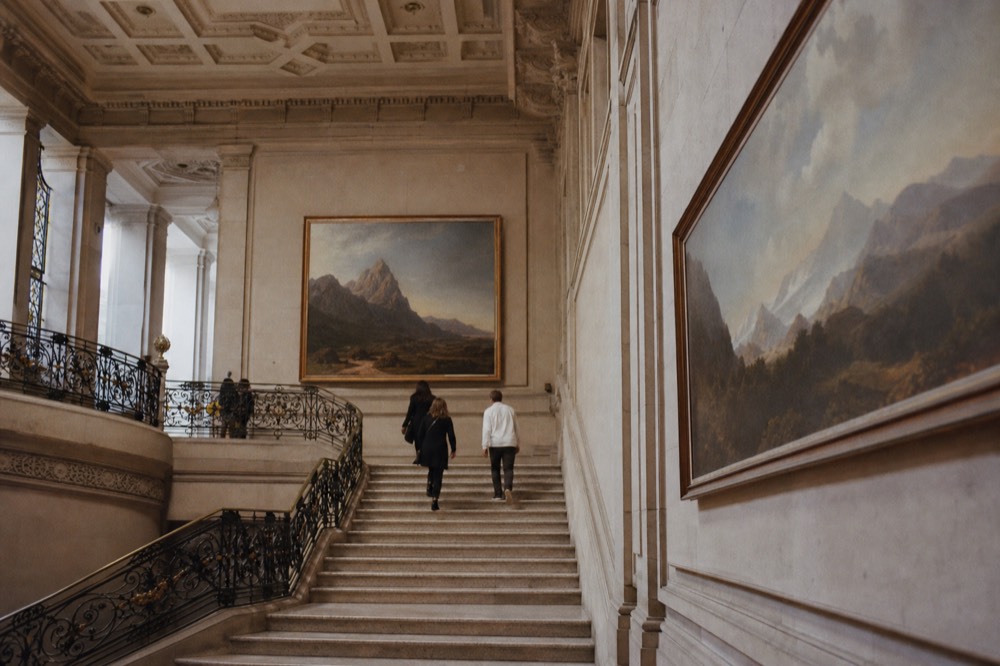
The national art museum in a grand Beaux-Arts palace off the Alameda, tracing Mexican painting and sculpture from the viceroyalty to 1954, with Jose Maria Velasco's great valley landscapes.
Opens the official listing with live dates and prices. Book there; nothing is charged on this site.
Area
Centro Histórico, Mexico City
Theme
Art & muralism
In the plaza outside MUNAL stands El Caballito, Manuel Tolsa's bronze horse cast in 1803. Inside hang the sweeping Valley of Mexico landscapes that Jose Maria Velasco painted a century later, and between the two you get the whole arc of Mexican art.
What will you see at MUNAL?
MUNAL holds the national collection of Mexican art from the viceregal era to 1954, arranged so you can walk the country's painting from colonial altarpieces to the edge of the modern era. The signature rooms belong to Jose Maria Velasco and his luminous nineteenth-century views of the Valley of Mexico.
The story starts with the colonial galleries, religious painting and portraiture from the centuries of New Spain, then moves into the nineteenth century as Mexican artists trained at the Academy of San Carlos and turned to their own land and history. Velasco's landscapes are the high point for many visitors, wide green valleys under the volcanoes painted with almost scientific care.
Beyond Velasco the collection carries names worth slowing down for: the dreamlike symbolism of Julio Ruelas, Saturnino Herran's studies of Mexican faces and labour, and the early work of the muralists before they took to the walls. The building matches the art. The Italian architect Silvio Contri finished this Beaux-Arts palace around 1911 as a government ministry, and its marble staircase and gilded ceilings are a set piece in their own right.
What does MUNAL cost, and how do tickets work?
Walk-up admission is low, in line with other federal fine-arts museums, and you can pay at the door. The bookable product here is a guided visit, which you reserve online with the price shown on its listing.
MUNAL is a working national museum rather than a timed-entry attraction, so there is rarely a queue and no need to hold a slot in advance for general entry. A guided visit earns its place for a different reason: much of the labelling is in Spanish and the collection spans four centuries, so a guide who can walk you from the colonial rooms to Velasco and the early moderns makes the visit read as a single story rather than a series of unrelated rooms.
Sundays are free for Mexican nationals and residents with ID, as at other federal museums. Foreign visitors pay the standard admission every day, so treat the Sunday rule as a local benefit, not an overseas one.
How long do you need at MUNAL?
Plan an hour and a half to two hours. That covers the colonial rooms, the Velasco landscapes and the turn-of-the-century painting at a comfortable pace, with time for the staircase and the building itself.
The museum is large but not overwhelming, and the chronological layout makes it easy to keep a thread. If time is short, head straight for the nineteenth-century floor and the Velasco rooms, which are the reason most people come. Serious painting lovers can happily add another hour.
The location makes it simple to extend the day. The Palacio de Bellas Artes and its murals are a three-minute walk across toward the Alameda, so many visitors pair the two into one art-heavy morning in the Centro Historico.
Getting there, hours and the closed day
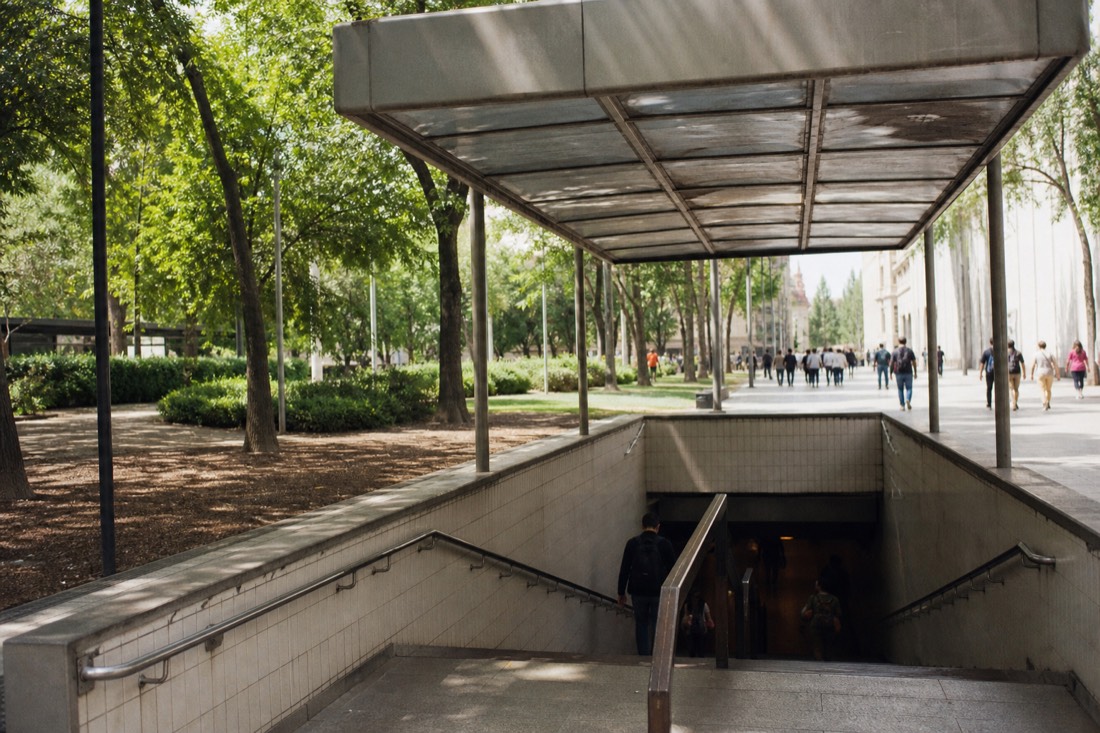
MUNAL stands at Tacuba 8 in the Centro Historico, a few steps from the Palacio de Bellas Artes. The nearest Metro stops are Allende on Line 2 and Bellas Artes on Lines 2 and 8. It opens Tuesday to Sunday and closes on Mondays.
This is deep in the walkable heart of the old city, so most Centro routes pass close by. The table below has the essentials, and current hours and the guided-visit price are on the listing before you go.
At a glance
Detail
Where
Tacuba 8, Centro Historico
Nearest Metro
Allende (Line 2); Bellas Artes (Lines 2 and 8)
Opening hours
Tuesday to Sunday; closed Mondays
Admission
Low walk-up; guided visit bookable online
Free Sunday
Mexican nationals and residents with ID only
What to pair with MUNAL nearby
MUNAL sits in the middle of the best cluster of art in the city, all on foot.
The Palacio de Bellas Artes and its murals are three minutes away and the obvious next stop. For a change of register, Museo Soumaya in Plaza Carso spans Rodin and the European masters, and Torre Latinoamericana nearby gives the aerial view over the whole Centro Historico.
Questions people ask
What is MUNAL best known for?
The Museo Nacional de Arte holds Mexican art from the viceregal era to 1954. It is best known for Jose Maria Velasco's nineteenth-century landscapes of the Valley of Mexico, its colonial painting, and the Beaux-Arts palace that houses it.
Is MUNAL open on Mondays?
No. MUNAL opens Tuesday to Sunday and closes on Mondays, like most federal museums in the city. If you are visiting on a Monday, the free-entry Museo Soumaya in Plaza Carso is open instead.
Is MUNAL free to visit?
No, but walk-up admission is low and paid at the door. Sundays are free for Mexican nationals and residents with ID only; foreign visitors pay the standard rate every day. A guided visit is separately bookable online.
How long should I spend at MUNAL?
About an hour and a half to two hours covers the colonial rooms, the Velasco landscapes and the early modern painting. If time is short, head for the nineteenth-century floor first, then pair the visit with Bellas Artes nearby.
How do I get to MUNAL?
It stands at Tacuba 8 in the Centro Historico, a few steps from the Palacio de Bellas Artes. The nearest Metro stops are Allende on Line 2 and Bellas Artes on Lines 2 and 8, both a short walk away.
Centro Histórico, Mexico City · Rivera and Orozco murals under the Art Deco dome
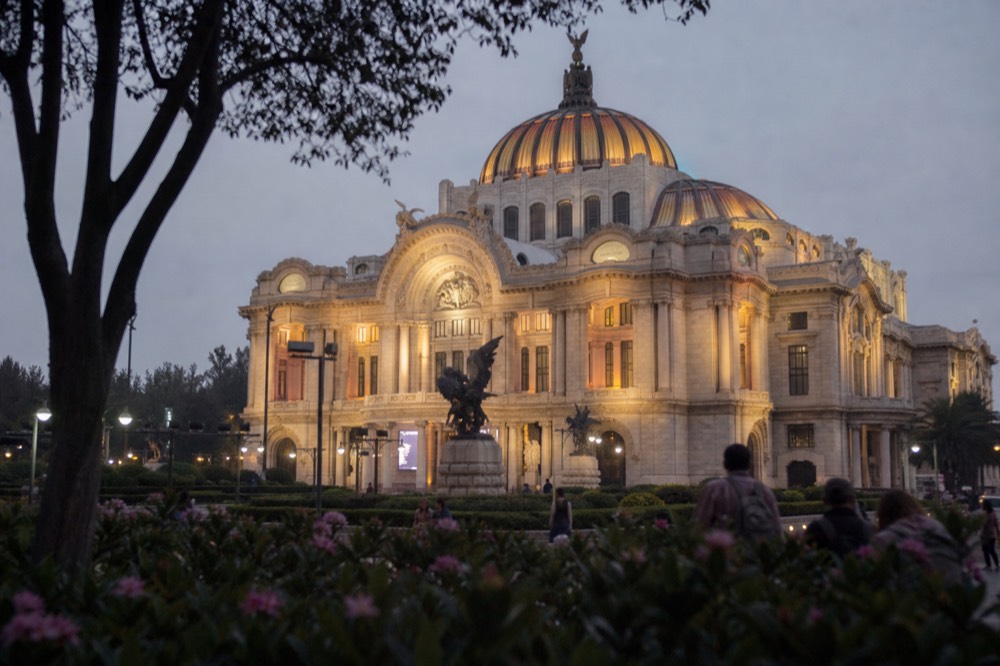
The white-marble concert hall and art museum on the Alameda, Art Nouveau outside and Art Deco within, holding the city's great mural cycle by Rivera, Orozco and Siqueiros. The ground-floor lobby is free; the upstairs museum charges a small admission. A private guide can walk you through the murals in about ninety minutes. Home stage of the Ballet Folklórico.
from $60guided muralism tour, from $60, live price on the listingCheck availability →
Bosque de Chapultepec, Mexico City · Mexican modernists and Frida's Two Fridas
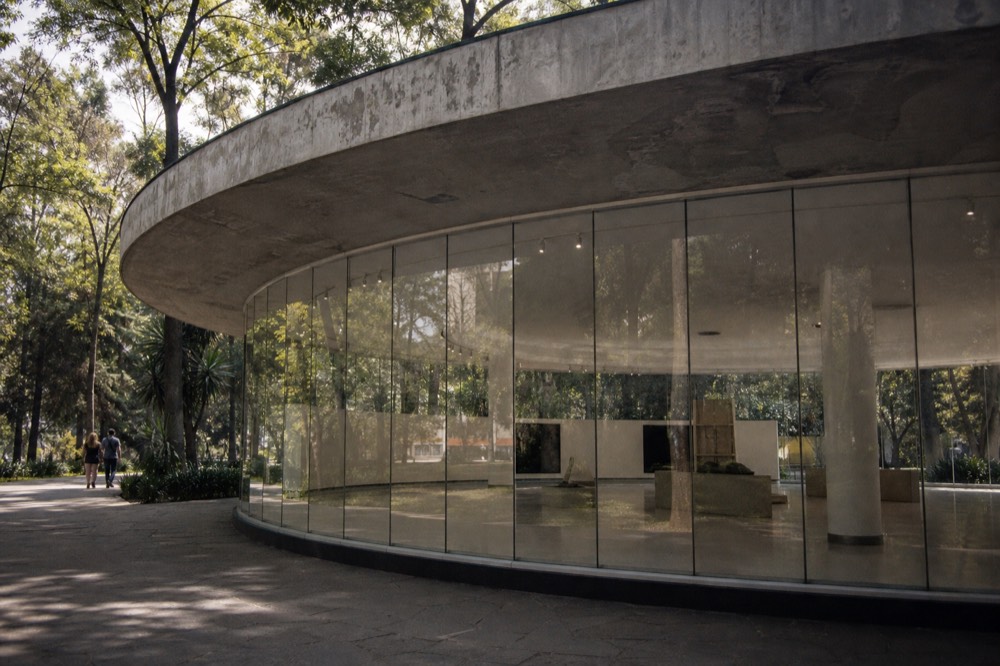
Mexico’s modern-art museum in Chapultepec, holding twentieth-century Mexican work including Frida Kahlo’s The Two Fridas, across two low circular pavilions among the trees. Walk-up admission is about 95 MXN and free on Sundays for everyone; the bookable product here is an optional art-expert guided visit. Closed Mondays.
Nuevo Polanco, Mexico City · Free entry, Rodin bronzes and a silver facade
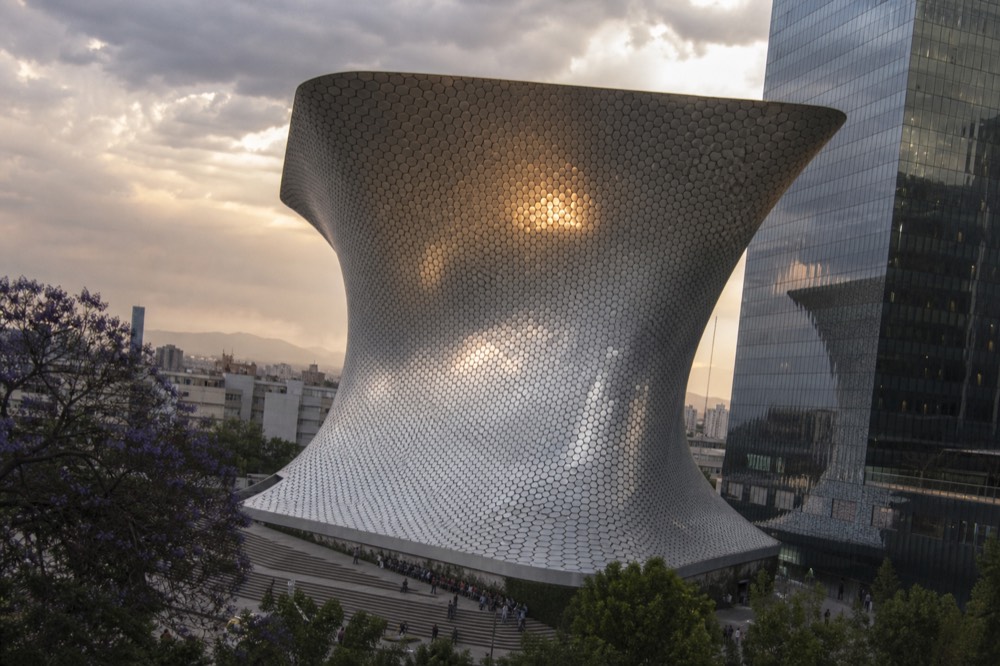
The mirror-clad, wave-shaped building in Nuevo Polanco holding Carlos Slim's collection, strongest in Rodin bronzes, European old masters and Mexican art. Entry is free; the paid product here is an optional guided tour. Open daily, including Mondays.
from $53optional guided tour; museum entry itself is free, live price on the listingCheck availability →