History Museums in Mexico City: Anthropology, Templo Mayor, the Castle and the Deep-Time Sweep for 2026
Mexico City's history museums for 2026: the Anthropology Museum, Templo Mayor, Chapultepec Castle and the Palacio Nacional murals, with foreigner prices.
 By Diego Morales, Mexico City Museums Specialist & Cultural Guide
You can walk from the excavated foundations of an Aztec temple to a mural of the Mexican Revolution in a single afternoon, and the walk is barely a mile. That compression is what makes the history of this city so easy to read on foot. The Spanish built their capital directly on top of Tenochtitlan, so the layers sit stacked in the same few blocks, and the museums that tell the story cluster in two spots you can cover on your own two legs.
Our team maps the history side of the Mexico City museums the way a good teacher would, in order, from deep-time Mesoamerica to the revolution. Four sites carry almost the whole arc: the Anthropology Museum for the pre-Hispanic civilizations, Templo Mayor for the Aztec capital itself, Chapultepec Castle for the colonial-to-modern chapters, and the Palacio Nacional murals for the sweep of it all in paint. Here is how they fit together, with 2026 foreigner prices and the closed days that catch people out.
Where does the deep-time-to-revolution story begin?
It begins in Chapultepec at the Anthropology Museum, the deepest of the collections, then moves downtown to Templo Mayor and the Aztec city, up to Chapultepec Castle for the conquest through the revolution, and finishes in front of Rivera's history murals in the Palacio Nacional. Four sites, two neighborhoods, and the whole national story in order.
Think of these museums as chapters rather than a menu. The Anthropology Museum holds the deep past, the civilizations that rose and fell across Mesoamerica over three thousand years. Templo Mayor is the pivot point, the literal center of the Aztec capital the Spanish destroyed. Chapultepec Castle picks up the modern thread, the viceroyalty, independence and the reforms, and the Palacio Nacional murals compress all of it into a single painted staircase. Read in that order, the city stops being a jumble of ruins and becomes a clear line.
The table lays out the four core sites plus two free companions, with 2026 foreigner admissions and the closed days. Three of the four are INAH museums charging the same 210 MXN foreigner rate, and all of those close Mondays. The neighborhood column is the one to plan around: the Centro Histórico and the Bosque de Chapultepec each hold half the story.
| Site | Chapter it tells | 2026 foreigner adult | Area | Closed day |
|---|---|---|---|---|
| Museo Nacional de Antropología | Pre-Hispanic Mesoamerica | Around 210 MXN (~$10.50) | Bosque de Chapultepec | Monday |
| Templo Mayor | Aztec Tenochtitlan | Around 210 MXN (~$10.50) | Centro Histórico | Monday |
| Chapultepec Castle | Colonial era to the revolution | Around 210 MXN (~$10.50) | Bosque de Chapultepec | Monday |
| Palacio Nacional (murals) | All of it, painted by Rivera | Free with a photo ID | Centro Histórico | Open (ID required) |
| Museo Nacional de las Culturas | World cultures, in the old mint | Free | Centro Histórico | Monday |
Is the Anthropology collection the essential first stop?
Yes. If you visit one history museum, make it the Museo Nacional de Antropología in Chapultepec. It holds the Aztec Sun Stone, Pakal's jade funerary mask, the Teotihuacan hall and room after room of Maya, Olmec and Mexica work. Foreigner admission is around 210 MXN (~$10.50), it closes Mondays, and it genuinely needs three to four hours.
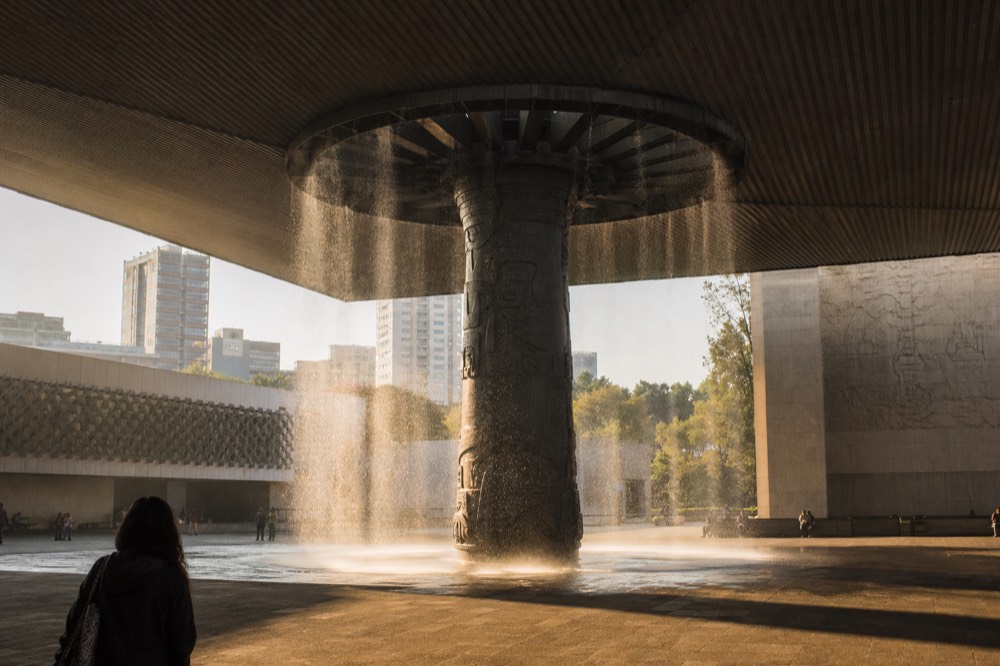
The numbers earn the recommendation. The museum recorded 5,048,893 visits in 2025, a record and a sharp jump from 3.78 million the year before, which makes it the most-visited museum in the country by a wide margin and roughly 43 percent of all INAH museum visits. That popularity is deserved. The building, with its vast cantilevered umbrella of a courtyard fountain, is a landmark in its own right, and the twelve ground-floor halls run from the earliest peopling of the Americas to the Aztec capital that stood where the city stands now.
Give it real time. Two hours only skims the surface; three to four lets you do the Mexica hall with the Sun Stone, the Maya hall with the reconstructed tomb of Pakal, and the Teotihuacan room without racing. The museum opens Tuesday to Sunday, roughly 9:00 to 18:00, and closes Mondays like most federal institutions. Some visitor guides note free guided tours on weekdays. Confirm the schedule and ticket rules on the official Anthropology Museum site, and our blog on what to see at the Anthropology Museum picks the halls to prioritize if you are short on time.
One thing most visitors miss is the upper floor. The ground-floor halls hold the archaeology everyone comes for, but the galleries upstairs turn to ethnography, the living cultures, dress and crafts of Mexico's present-day Indigenous peoples, and they are far quieter than the Sun Stone below. If you still have stamina after the core halls, an hour up there is the part people skip and later wish they had not, because it connects the ancient rooms to the country you are actually standing in.
| Anthropology Museum | 2026 |
|---|---|
| Foreigner adult | Around 210 MXN (~$10.50); check the live listing |
| Resident with ID | Around 105 MXN |
| Signature pieces | Sun Stone, Pakal's jade mask, Teotihuacan hall |
| Time to allow | 3 to 4 hours |
| Closed | Mondays; open Tuesday to Sunday |
What survives of Aztec Tenochtitlan in the center?
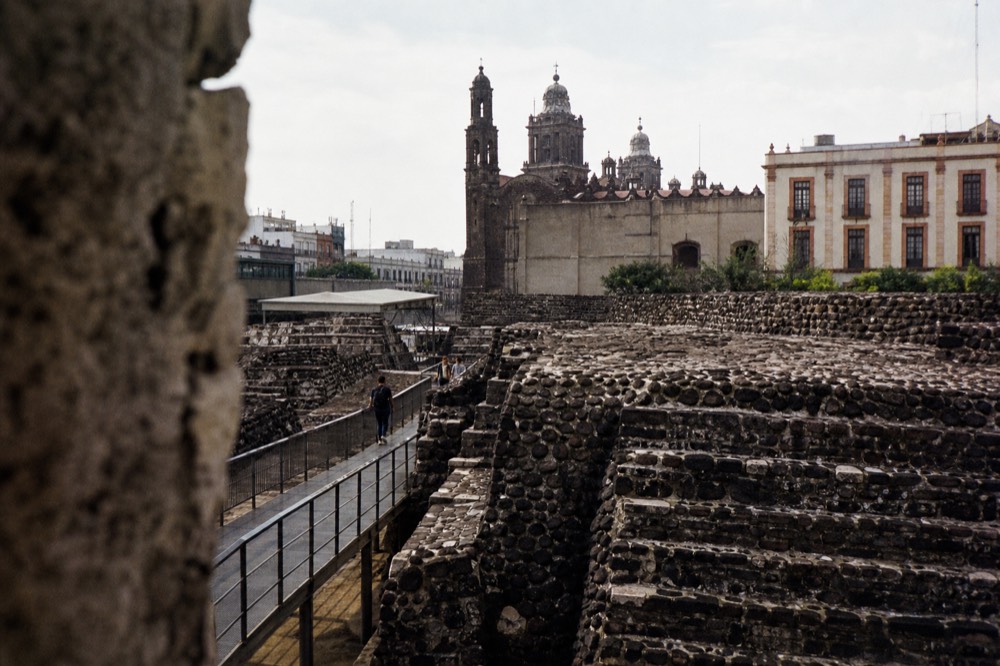
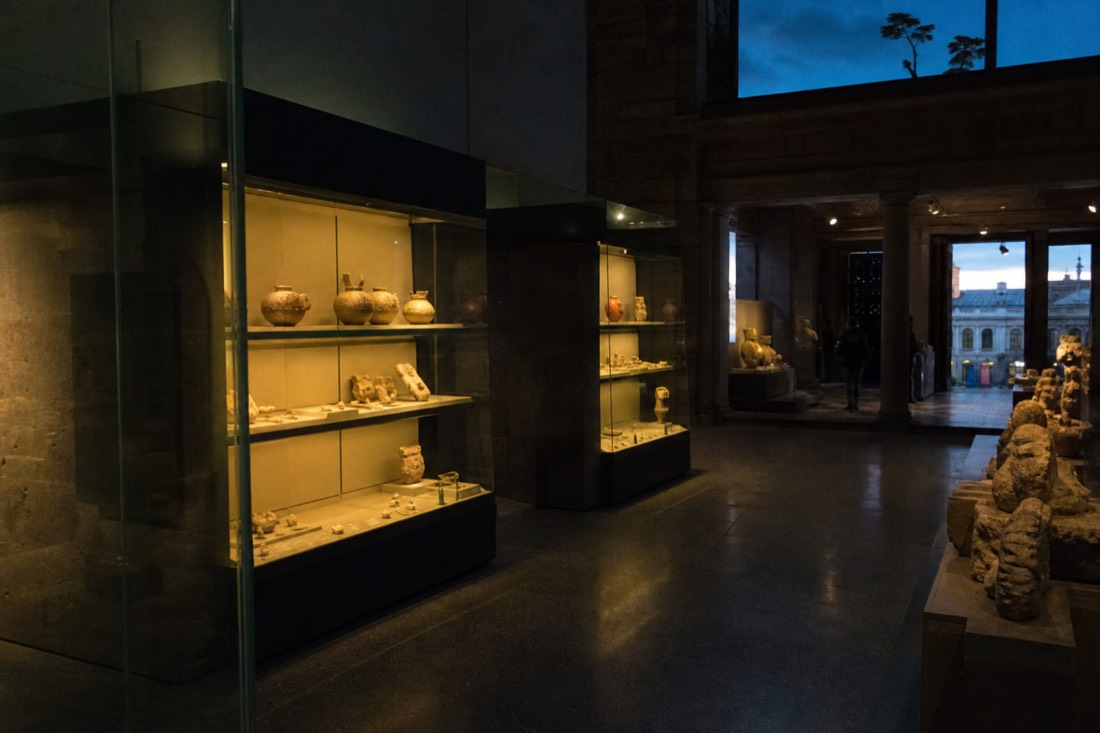
Templo Mayor is what survives, and it is startling. A raised walkway crosses the excavated ruins of the twin temple to Tlaloc and Huitzilopochtli, right beside the cathedral, where the Spanish tore the Aztec city down to build their own. The site museum holds the enormous Coyolxauhqui and Tlaltecuhtli stones. Foreigner admission is around 210 MXN (~$10.50), and it closes Mondays.
Templo Mayor was lost for centuries under the colonial city until electrical workers struck the eight-ton Coyolxauhqui stone in 1978, and the dig that followed uncovered the ceremonial heart of Tenochtitlan a block from the Zócalo. Walking the raised path over the layered temple platforms, with the cathedral rising behind, is the single clearest lesson in how one city was built on the bones of another. The adjoining museum is superb, holding the offerings pulled from the site and the vast circular Coyolxauhqui and the Tlaltecuhtli monolith.
Through much of 2026 the site museum has run "Tenochtitlan, origen y vocación de una ciudad," a temporary show on the founding and meaning of the Aztec capital, worth catching if your dates align. Templo Mayor rewards ninety minutes to two hours and pairs naturally with the cathedral and the Palacio Nacional next door, so it anchors the downtown history cluster. For the fuller ranking against the other heavyweights, see the blog on the most-visited museum in the city.
Hold entry to the ruins and the site museum on the Templo Mayor entry ticket page before a weekend visit.
The three ticketed sites sit close enough in price and closed day that it pays to hold your dates before a weekend, when the gate lines at the busiest of them build fast.
Why does Chapultepec Castle carry the modern chapters?
Because it lived them. Chapultepec Castle sits on a hill above the park as the Museo Nacional de Historia, the only castle in the Americas to have housed royalty, with Orozco and O'Gorman murals and long views down Reforma. It traces Mexico from the conquest through independence to the revolution. Foreigner admission is around 210 MXN (~$10.50), it closes Mondays, and tickets are sold at the gate.
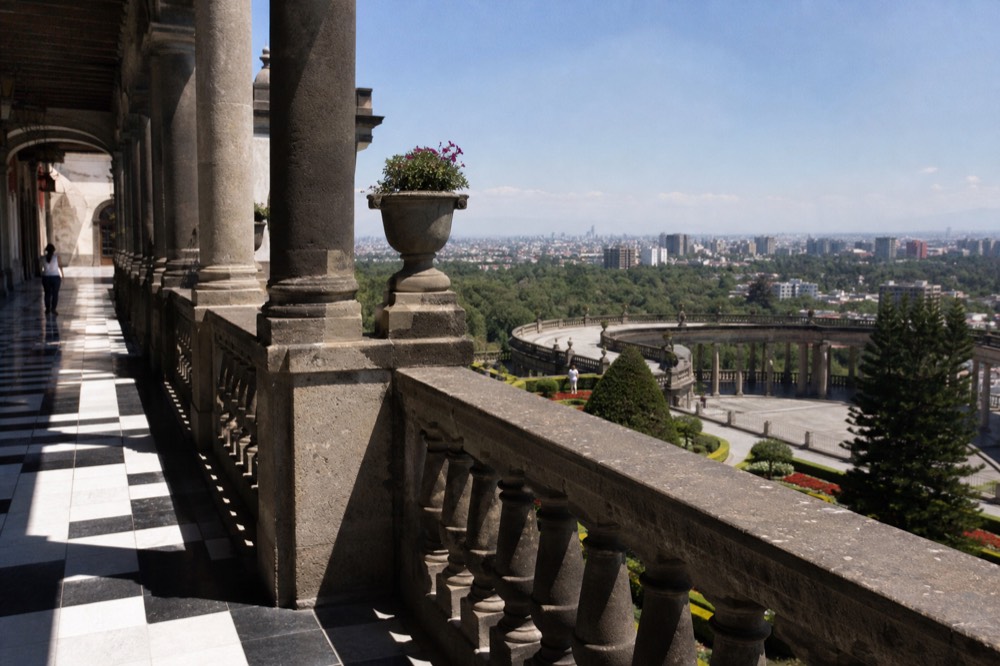
The castle plays two roles at once, and that is its charm. It is a period residence, with the painted ceilings, carriages and furnishings of the emperor Maximilian and later presidents, and it is a formal history museum walking you from the Spanish conquest to the 1910 revolution. The dramatic O'Gorman mural of independence and the Orozco panels are highlights, and the terraces give the best free view in the city, straight down the Paseo de la Reforma.
The building's own story is worth knowing before you climb. Begun in the 1780s as a viceregal retreat, it later served as a military college, then became the imperial home of Maximilian and Carlota in the 1860s, who laid out the Paseo de la Reforma below as a grand avenue linking the hill to the city center. Presidents lived here until the 1930s, when it was handed over as the national history museum. Every terrace and painted room carries a layer of that history, which is why the interiors reward as much time as the view does.
Two honest notes. The walk up the hill is real, a steady ramp from the base with an occasional shuttle, so factor it in if stairs are hard. And the museum's visitor rating runs lower than its neighbors, driven by the climb, the weekend crowds and the odd gallery closure rather than the collection itself. Tickets are walk-up at the base-of-ramp booth or through the official INAH portal, with no mandatory timed slot in 2026, though weekends and the free-entry Sunday crowds build lines. Our note on buying castle tickets at the gate walks through the walk-up door. Confirm hours on the official National Museum of History site, and our blog on which day the castle is closed settles the Monday question.
| Chapultepec Castle | 2026 |
|---|---|
| Foreigner adult | Around 210 MXN (~$10.50); check the live listing |
| Resident with ID | Around 105 MXN |
| Tickets | Walk-up at the base-of-ramp booth or the INAH portal |
| Hours | Tuesday to Sunday, about 9:00 to 17:00 |
| Closed | Mondays, including holidays |
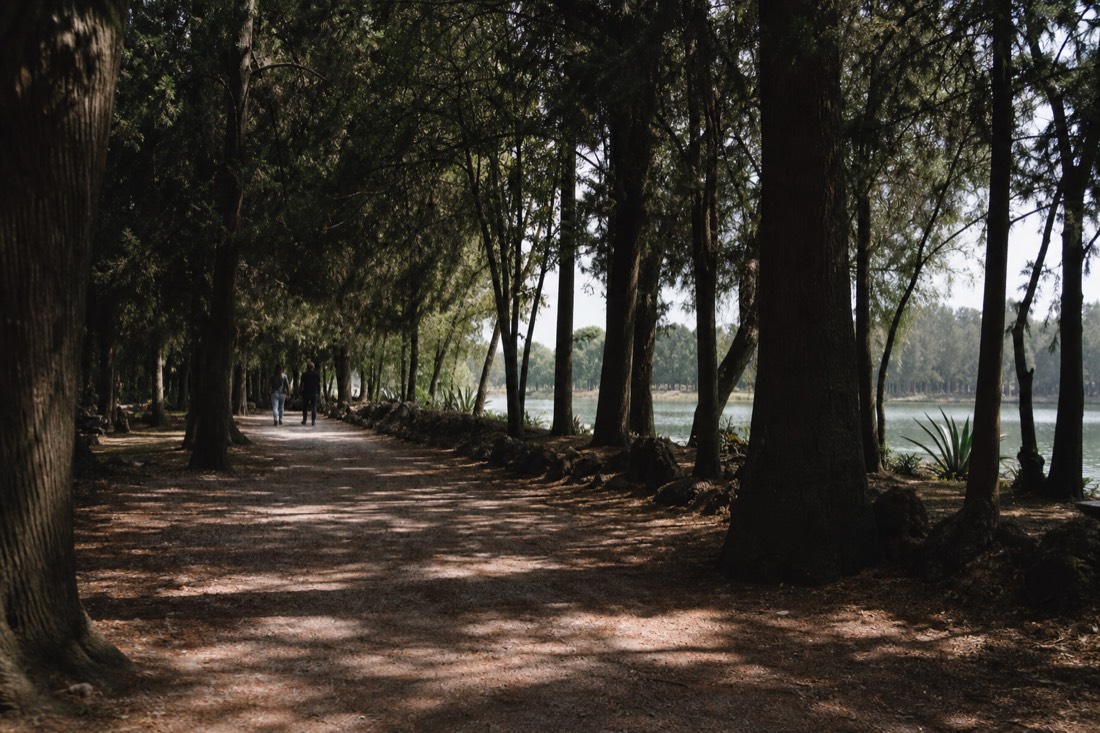
Where can you walk inside the murals of Mexican history?
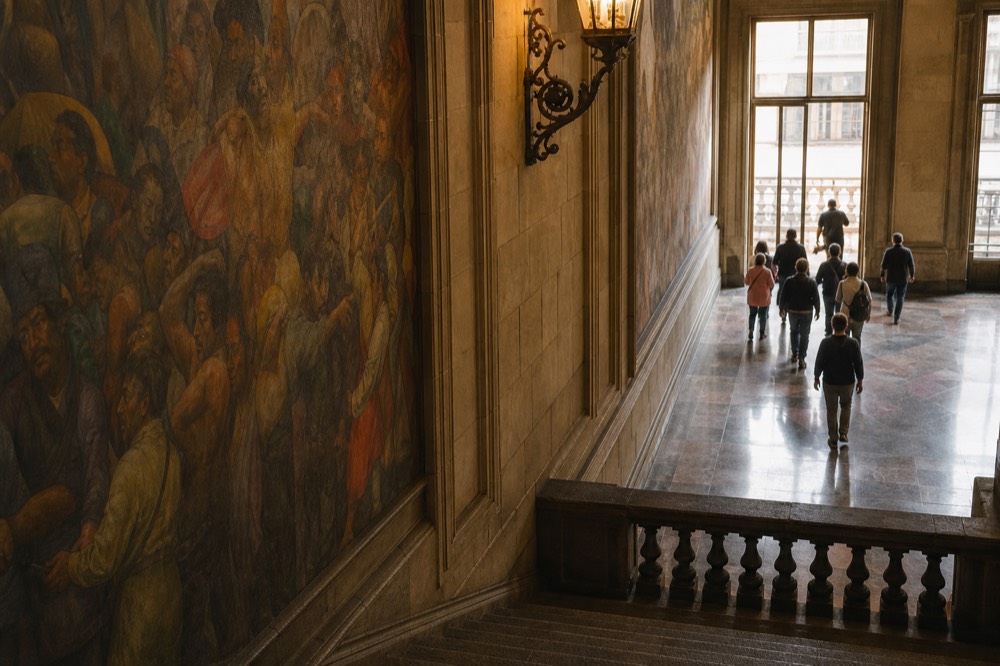
In the Palacio Nacional on the Zócalo, where Diego Rivera's vast staircase murals paint the whole history of Mexico from Tenochtitlan to revolution, free with a photo ID. Nearby, the Museo Nacional de las Culturas fills the old colonial mint with the cultures of the world, also free. Both put serious history in front of you for the cost of showing identification.
The Palacio Nacional is the free history stop nobody should miss. Rivera spent years on the grand staircase and the corridor above, and the result is the single most ambitious narrative mural in the country, a painted history that reads left to right through the Aztec world, the conquest, colonial rule and the revolution. Entry is free with a photo ID, there is nothing to buy, and the seat of the federal government around it is a monument in itself. Bring a passport or ID card, because you will not get past security without one.
Give the murals more than a glance. Rivera worked the main staircase as one sweeping composition, with the pre-Hispanic world on the right wall, the violence of conquest and colony across the center, and a vision of a modern Mexico on the left, while the corridor above continues the story panel by panel through Indigenous life before the Spanish arrived. A slow half-hour, ideally with a guide or an audio track, turns a wall of color into a history you can actually read, and it is the best free hour of the whole downtown cluster. For where the rest of the great mural cycles hang, from Bellas Artes to San Ildefonso, our guide to where the mural masters hang maps them out.
A few minutes away on Calle Moneda, behind the National Palace, the Museo Nacional de las Culturas occupies the old colonial mint and turns outward, showing the cultures of the world rather than Mexico alone, and it is free to enter. Neither of these charges an admission, which makes them the backbone of a low-cost history day. For every other place that costs nothing, our free museums guide lays out the genuinely-free list and the residents-only fine print.
| Free history stop | What you see | Note |
|---|---|---|
| Palacio Nacional | Diego Rivera's history murals | Free with a photo ID; bring identification |
| Museo Nacional de las Culturas | World cultures in the old mint | Free; closed Mondays |
| Templo Mayor site (from the street) | The excavated platforms, partly visible | The museum and walkway are ticketed |
What do these cost, and which day catches people out?
Three of the four core sites are INAH museums at around 210 MXN (~$10.50) for a foreign adult, with residents at roughly 105 MXN; the Palacio Nacional murals are free with a photo ID. The day that catches people out is Monday, when Anthropology, Templo Mayor and Chapultepec Castle all close. Free-Sunday covers residents only, so foreigners pay every day.
The pricing is consistent and modest, which makes budgeting easy. The INAH trio each charge the same 210 MXN foreigner rate, an increase that landed in 2026, and residents with ID pay half. A non-professional video permit adds a small fee if you plan to film. Even doing all four core sites, the total admission is a fraction of what a comparable history run costs in Europe or the United States.
A note on buying tickets. The three INAH sites sell walk-up admission at the gate, and Chapultepec Castle and Templo Mayor rarely need booking ahead, though weekend and Sunday crowds do build a line. The real advance-booking headache in the city belongs to the Frida Kahlo house across town, not to this history trio. Here, arriving at opening beats any queue, and a skip-line ticket mainly buys back time on a busy Saturday.
Monday is the real trap, because it derails more history days than anything else. The three INAH museums all close it, leaving the Palacio Nacional murals as the main paid-history option that stays open, free with ID. The other honest point is free-Sunday: at these INAH museums it applies to Mexican nationals and residents with ID only, so a foreign visitor pays the full rate on a Sunday exactly as on a Tuesday, and the Sunday crowds of free-entry residents make the popular sites busier, not cheaper. Our guide to which museums open on Mondays covers the workaround.
| Site | 2026 foreigner adult | Free Sunday | Closed day |
|---|---|---|---|
| Museo Nacional de Antropología | Around 210 MXN (~$10.50) | Residents with ID | Monday |
| Templo Mayor | Around 210 MXN (~$10.50) | Residents with ID | Monday |
| Chapultepec Castle | Around 210 MXN (~$10.50) | Residents with ID | Monday |
| Palacio Nacional (murals) | Free with a photo ID | Free with ID any day | Open, ID required |
How do you cluster a history day so you walk less?
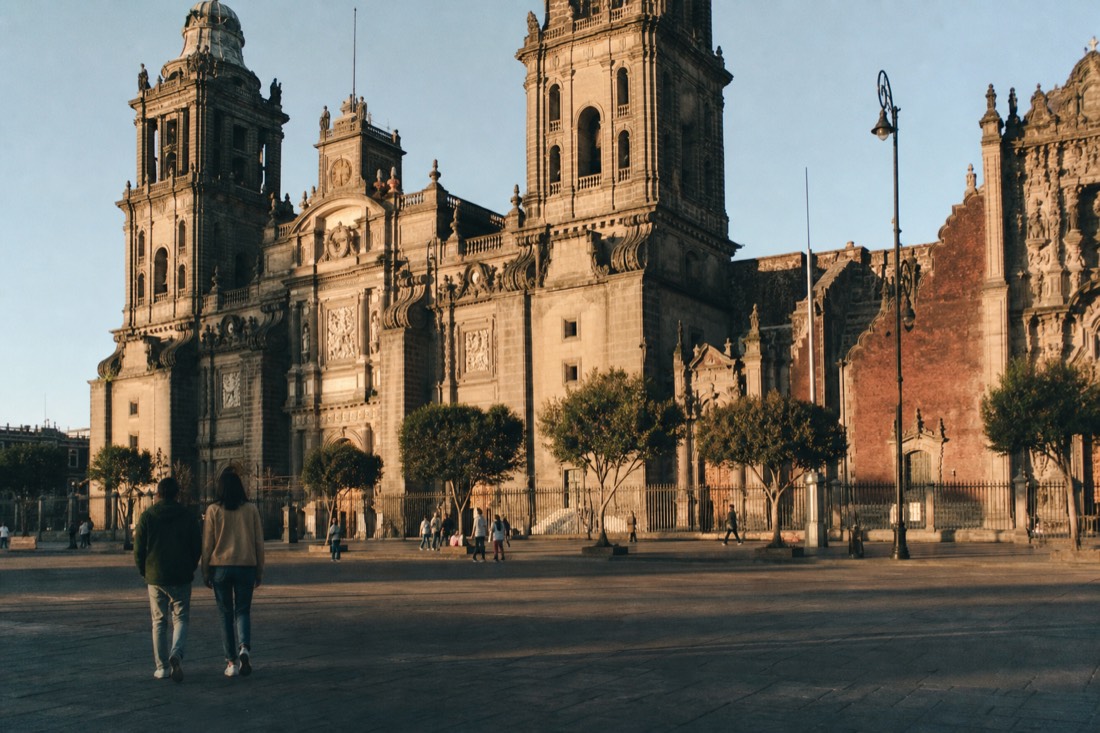
Split it into two clusters and do not fight the traffic between them. Give the Centro Histórico a downtown morning of Templo Mayor, the Palacio Nacional murals and the Museo Nacional de las Culturas, all a few minutes apart. Save the Bosque de Chapultepec for a separate day of the Anthropology Museum and the castle. Add Teotihuacan as its own trip.
The downtown cluster is the efficient one, because everything sits within a few blocks of the Zócalo. Start at Templo Mayor when it opens, cross to the Palacio Nacional for Rivera's staircase, and finish at the Museo Nacional de las Culturas around the corner, with the cathedral and MUNAL nearby if you want more. It is a dense, mostly walkable half-day of deep history, and two of the three stops are free. For a plan that folds this into a wider single day, our one-day museum itinerary does the sequencing.
Chapultepec is the other half, and it deserves its own outing because the Anthropology Museum alone eats three to four hours. Do Anthropology first thing, then walk to the castle for the modern chapters and the view, and you have covered deep-time and the revolution in a single park, as our Chapultepec park museums guide details. The one history stop that is genuinely out of town is Teotihuacan, whose logistics, including the fact that the pyramids cannot be climbed in 2026, sit in our Teotihuacan day-trip guide. Whichever you build, the rule holds: fewer sites, more time, and let the free ones fill the gaps.
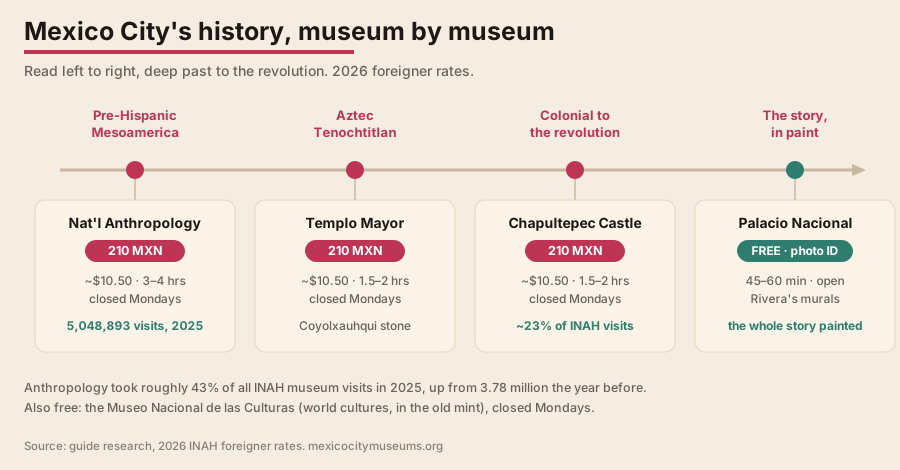
| If you want | Go to | Time to allow |
|---|---|---|
| The deep pre-Hispanic past | Museo Nacional de Antropología | 3 to 4 hours |
| The Aztec city itself | Templo Mayor | 1.5 to 2 hours |
| Conquest to the revolution | Chapultepec Castle | 1.5 to 2 hours |
| The whole story in paint, for free | Palacio Nacional murals | 45 minutes to 1 hour |
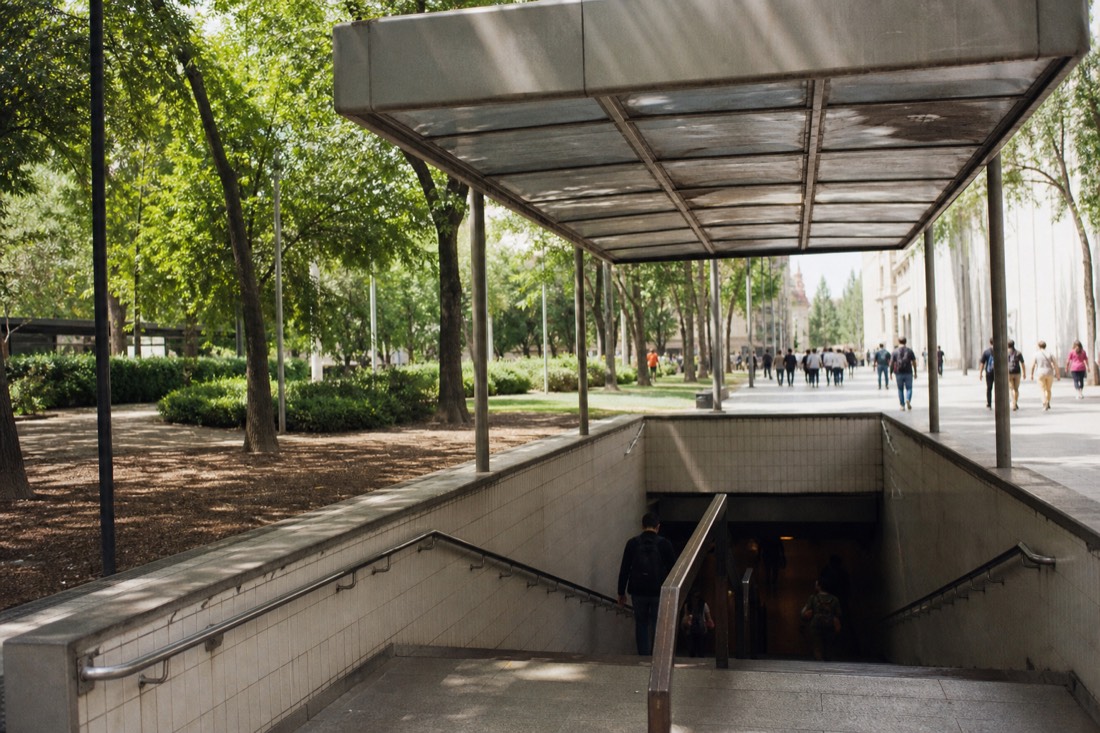
The history here rewards reading it in order more than almost any city we know. Do it backward and it is a shrug of ruins and portraits; do it as a line, from the Sun Stone through the Aztec center to the castle and the revolution murals, and the whole country clicks into focus. Our blog on whether the Anthropology Museum is worth it makes the case for starting where we do.
If you take one thing from this guide, let it be the two-cluster rule. Do the Centro Histórico as one walkable morning and Chapultepec as another, avoid Monday for the ticketed sites, and give the Anthropology Museum the three or four hours it actually needs. Do that and you will have walked the whole history of Mexico, from deep time to the revolution, without a wasted afternoon or a fight with the traffic.
Match The Day To Your Plans And Compare Costs
Editorial starting point. Confirm your party's age, access needs and departure details on the listing.
5 Hour Tour through Chapultepec, Anthropology Museum and Castle: Both museum admissions; Guided park and museum itinerary Not included: Lunch not promised; Castle locker not promised 5 hours; castle first, then Anthropology
Mexico City, Anthropology Museum Tour Summary: private guide; museum ticket Not included: transport not stated as included 2.5 hours
Templo Mayor Tour, Mexico City: Aztec Ruins & Museum: Presential Guide; All Fees and Taxes; Access to the Archaeological Zone and the Museo del Templo Mayor Not included: Tip 2 hours
EXCLUSIVE TOUR Chapultepec Castle - Small Groups: live guide; castle admission and permanent exhibitions Not included: transport; other attractions 2 hours
Compare Your Actual Quotes
Use the same currency for both totals, including transport, admission and guide fees. This compares your quotes, not live prices.
Compare what each total includes: admission, a guide, transport and time arranging reservations.