A Realistic One-Day Mexico City Museum Itinerary for 2026
A realistic one-day museum itinerary for Mexico City in 2026: cluster Chapultepec and the Centro Histórico to walk less, with hour-by-hour timing, 2026 prices, and slower alternatives.
 By Diego Morales, Mexico City Museums Specialist & Cultural Guide
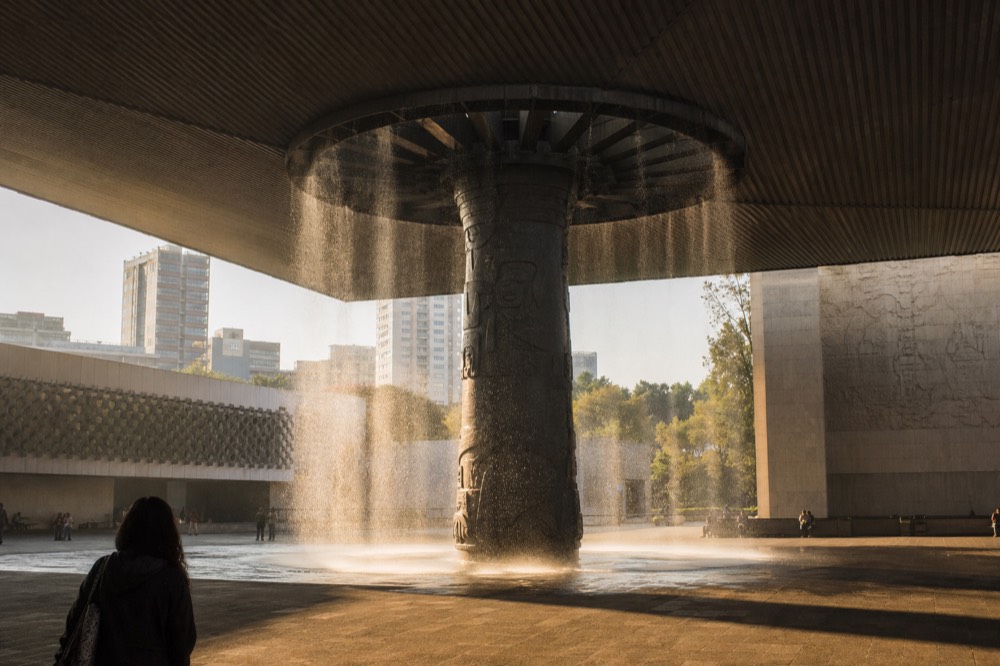
The mistake almost everyone makes on a first museum day here is trying to see too much. This city holds more museums than almost anywhere on earth, one of them draws five million visitors a year on its own, and a day spent sprinting between four of them leaves you remembering none. A good one-day plan does the opposite. It picks a small number of great things, clusters them so you walk instead of sit in traffic, and builds in a real lunch.
A first day among Mexico City museums is really an exercise in restraint, and the geography helps you make the cut. The heavy hitters fall into two tight clusters, the Bosque de Chapultepec and the Centro Histórico, and the smart move is to spend the morning in one and the afternoon in the other, or to go deep on just one if you would rather linger. This guide gives you an hour-by-hour route that clusters both, plus slower alternatives and the 2026 prices, so you spend the day looking at things rather than working out where to go next.
Can you really see the main museums in one day?
Not all of them, and you should not try. The National Museum of Anthropology alone needs three to four hours, so one day is a choice, not a checklist. The workable version pairs a Chapultepec morning with a Centro Histórico afternoon, clustering short-walk sights in each. Avoid Mondays, when the big museums close, and start early.
The honest math rules out a greatest-hits marathon. If you gave the Anthropology Museum the time it deserves, you would burn most of a day on that one building. So a real one-day plan is about trade-offs: you either cover two clusters at a brisk pace, seeing highlights rather than everything, or you pick a single cluster and go deep. Both are good days. What does not work is scattering yourself across Coyoacán, Polanco and the Centro in one afternoon, because the transfers eat the hours.
The two clusters below are the backbone of every plan in this guide. Chapultepec holds the Anthropology Museum and the castle within one park; the Centro Histórico packs Templo Mayor, the free Palacio Nacional murals, the Palacio de Bellas Artes and the Torre view into a few walkable blocks. Choose your day around these, not around a wish list. For the ranked case on which single museums are worth the time in the first place, see our ranked shortlist of the museums that reward a visit.
Two habits keep a two-cluster day from unraveling. Eat a real lunch between the clusters rather than grazing, because the afternoon is long and the Centro has few quick stops once you are moving. And set a soft time cap on each museum before you walk in, so a single gripping hall does not quietly eat the stop after it. The plan works when you treat the clock as a guide, not when you ignore it.
| Cluster | Museums and sights | Why cluster it |
|---|---|---|
| Bosque de Chapultepec | Anthropology Museum, Chapultepec Castle, MAM, Tamayo | All in one park, short walks between them |
| Centro Histórico | Templo Mayor, Palacio Nacional murals, Bellas Artes, Torre, MUNAL | Walkable around the Zócalo and Alameda |
What is the best full-day route?
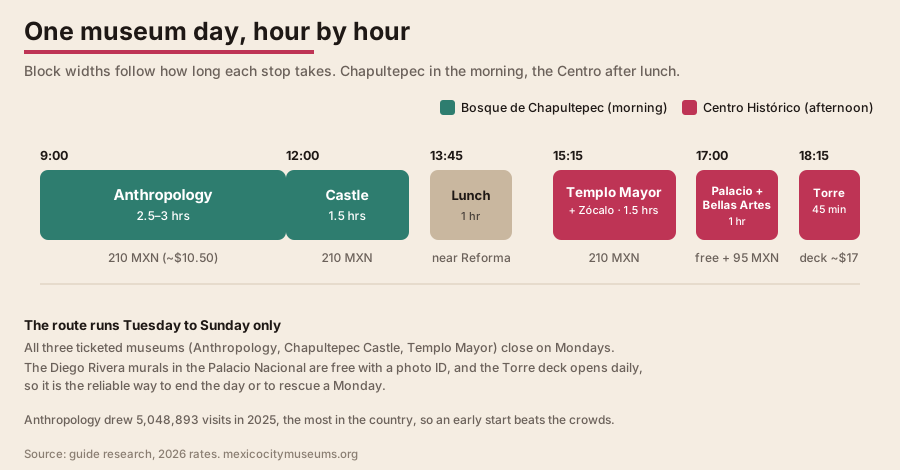
Start at the Anthropology Museum when it opens, walk to Chapultepec Castle in the same park, then break for lunch. Move to the Centro Histórico for Templo Mayor and the free Palacio Nacional murals, look into the Palacio de Bellas Artes, and end at the Torre Latinoamericana for the sunset view. It is a full day, so keep each stop tight.
This is the maximal version, and it works because both halves cluster. The morning stays entirely inside Chapultepec park: the Anthropology Museum at opening while it is quiet, then a short walk to the castle on its hill. After lunch near Reforma, a fifteen-minute metro ride or taxi drops you into the Centro Histórico, where everything else sits within a few blocks of the Zócalo. You finish high up the Torre as the light goes. It is ambitious but doable if you keep moving and do not let any single stop sprawl.
The timetable below is the shape of the day, not a stopwatch. If it feels like too much, and for many people it will, the fix is easy: drop the castle in the morning or Templo Mayor in the afternoon and give the rest more room. The Centro Histórico is a UNESCO World Heritage site in its own right, so even the walking between stops is part of the day; you can read the listing on the UNESCO Historic Centre page.
The one transfer that matters is the mid-afternoon hop from Chapultepec to the Centro Histórico. The cleanest option is a taxi or ride-hail, roughly fifteen to twenty-five minutes depending on traffic along Reforma, or Metro Line 1 straight into the center if you would rather skip the road. Either way, do it right after lunch when you are between clusters anyway, so the move costs you nothing you were not already spending.
| Time | Stop | Allow |
|---|---|---|
| 9:00 | National Museum of Anthropology | 2.5 to 3 hours |
| 12:00 | Chapultepec Castle | 1.5 hours |
| 13:45 | Lunch near Reforma | 1 hour |
| 15:15 | Templo Mayor and the Zócalo | 1.5 hours |
| 17:00 | Palacio Nacional murals and Bellas Artes | 1 hour |
| 18:15 | Torre Latinoamericana at dusk | 45 minutes |
| Leg of the day | Best option | Rough time |
|---|---|---|
| Within Chapultepec park | On foot | 10 to 20 min between stops |
| Chapultepec to the Centro Histórico | Taxi/ride-hail or Metro Line 1 | 15 to 25 min |
| Around the Centro Histórico | On foot | 2 to 10 min between stops |
How much time does the Anthropology Museum really need?
Three to four hours to do it properly, or about two and a half for a focused highlights run, which is what a one-day plan allows. It holds the Aztec Sun Stone, Pakal's jade funerary mask, and full halls on the Maya, Olmec, Teotihuacan and Mexica cultures. Foreigner entry is around 210 MXN (~$10.50), and it closes Mondays.
Start here, and start at opening. This is the most-visited museum in the country, with 5,048,893 visits recorded in 2025, so the gates and the popular halls fill up as the day goes on, and the first hour after the 9:00 opening is the calm one. For a one-day plan, do not try to finish all twelve ground-floor culture halls. Anchor your visit on the Mexica room with the Sun Stone, the Maya hall with Pakal's tomb and jade mask, and the Teotihuacan hall with its temple-facade reconstruction, then dip into whatever else pulls you. That focused loop runs around two and a half hours and leaves the day intact.
Admission for foreign adults is about 210 MXN, the museum opens Tuesday to Sunday from roughly 9:00 to 18:00, and it closes Mondays like the rest of the federal system. Confirm the day's hours on the official Anthropology Museum site. For a room-by-room plan of what to prioritize, our note on what to see at the Anthropology Museum is built for exactly this kind of time pressure.
A practical warning on pacing. The museum is arranged as a horseshoe of halls around a central courtyard, and the temptation is to start at hall one and grind through in order, which is how people burn ninety minutes on early prehistory and run out of steam before the Mexica and Maya rooms they actually came for. Jump straight to the highlights, or walk the loop backward. The Sun Stone and Pakal's tomb are the memories you want, so protect your energy for them.
The skip-the-line ticket with a digital guide saves the gate queue on a busy morning and keeps your schedule honest, so reserve it on the Anthropology Museum entry ticket page.
Before you commit to a packed day, one reality check. If the Anthropology Museum grips you, and it grips a lot of people, you may not want to leave after two and a half hours. That is fine. A day that becomes the museum plus a slow lunch and one afternoon stop is often the better trip.
Should you add Chapultepec Castle the same morning?
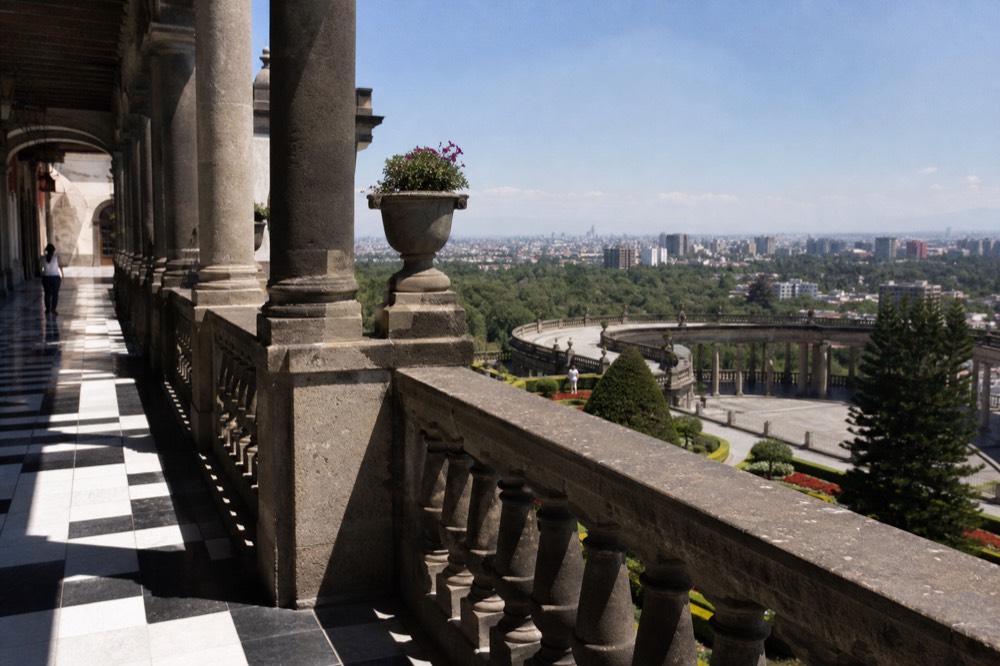
Yes, if your legs and attention hold. Chapultepec Castle sits on a hill in the same park, a short walk from the Anthropology Museum, so adding it costs no transit time, only a climb. It gives you a real castle, the National History Museum, murals by Orozco and O'Gorman, and the best free-standing view down Reforma. Entry is around 210 MXN (~$10.50), and it closes Mondays.
The castle is the natural second stop because it is already in the park. From the Anthropology Museum you walk across to the base of the hill and up a paved ramp to the castle, no taxi, no metro, just fifteen minutes on foot and a bit of a climb. Inside you get two things at once: a former imperial residence with painted ceilings and a state carriage, and a national history museum tracing Mexico from the conquest to the revolution. The terrace view straight down the Paseo de la Reforma is the payoff for the hill. Allow about ninety minutes.
Its visitor rating runs a touch lower than its neighbors, and the honest reasons are the climb and the occasional gallery closure rather than the collection, so go knowing the hill is real. Tickets are sold at the booth at the base of the ramp; there is no timed reservation. Check current details on the official National Museum of History site, and our full Chapultepec park museum guide shows how the castle, the Anthropology Museum, MAM and the Tamayo fit together if you want a park-only day.
Two smaller Chapultepec museums sit within the same short walks if the castle does not appeal or your day skews toward art. The Museo de Arte Moderno holds Frida Kahlo's famous "The Two Fridas" and opens free on Sundays for everyone, foreigners included, and the Tamayo shows international contemporary work in a low concrete landmark among the trees, also free on Sundays. Both make easy, cheap swaps into a Chapultepec morning.
| Chapultepec cluster | Walk from Anthropology | Time to allow |
|---|---|---|
| Chapultepec Castle | ~15 min plus the hill | 1.5 hours |
| Museo de Arte Moderno (MAM) | ~10 min | 1 hour, free Sundays for all |
| Museo Tamayo | ~10 min | 1 hour, free Sundays for all |
What fits into a Centro Histórico afternoon?
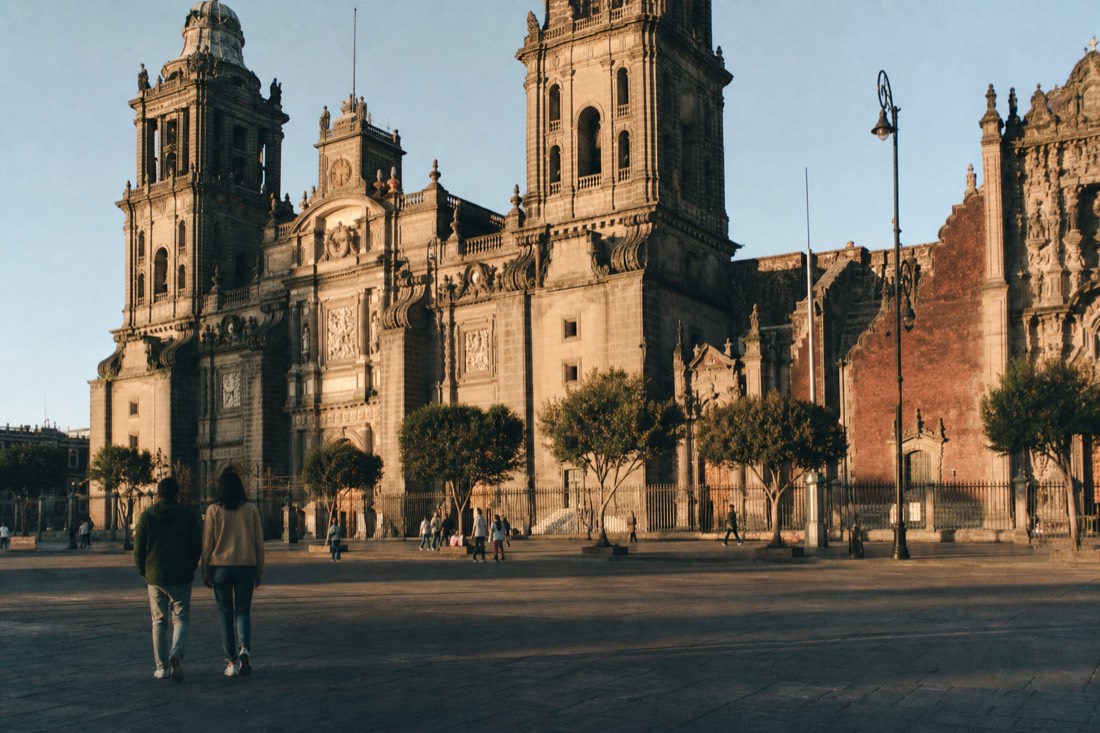
A lot, because it is all walkable. From the Zócalo you can do Templo Mayor beside the cathedral, the free Diego Rivera history murals inside the Palacio Nacional, and the Palacio de Bellas Artes on the Alameda, all within a few minutes of each other. Templo Mayor charges around 210 MXN (~$10.50); the Palacio Nacional murals are free with a photo ID.
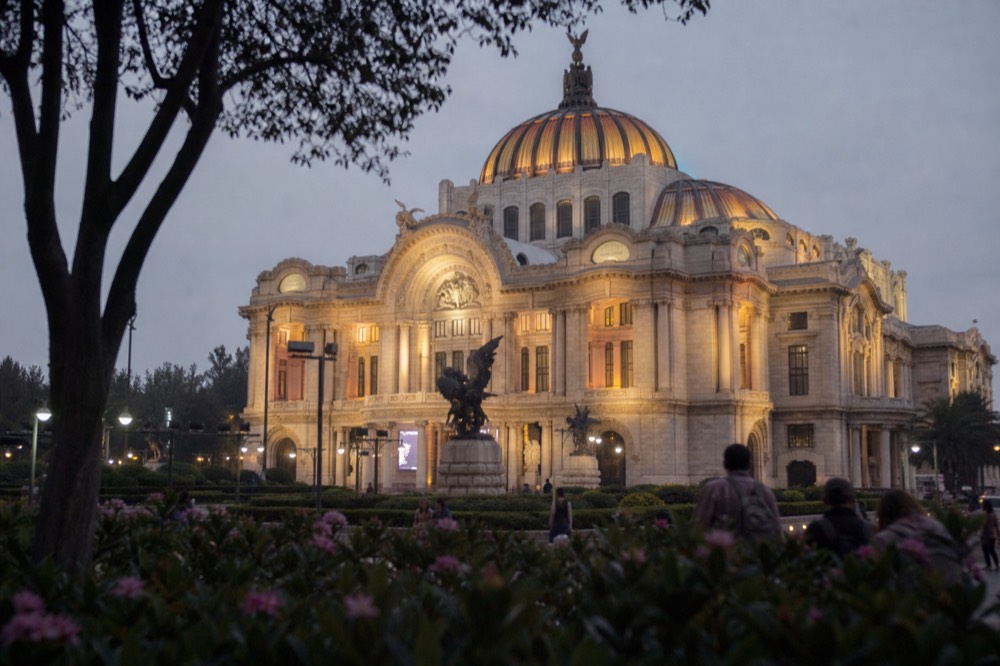
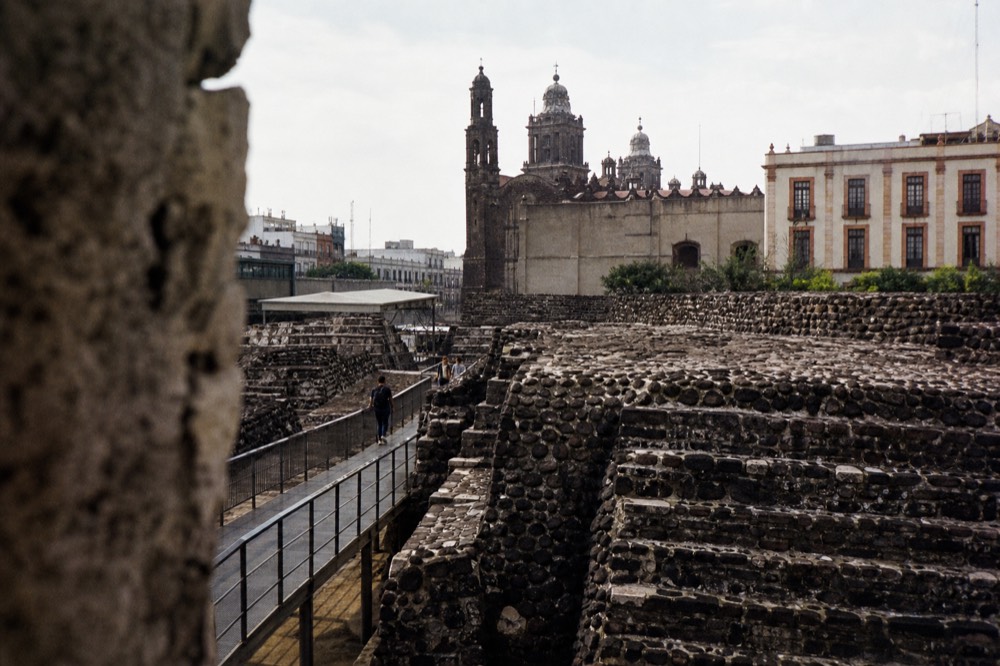
The Centro afternoon is the easy half of the day, because everything sits around one square. Start at Templo Mayor, the excavated Aztec temple beside the cathedral, where a raised walkway crosses the ruins and the site museum holds the great Coyolxauhqui and Tlaltecuhtli stones; ninety minutes is plenty. Cross the Zócalo to the Palacio Nacional, where Diego Rivera's sweeping staircase murals of Mexican history cost nothing beyond showing a photo ID. Then it is a short walk down to the Palacio de Bellas Artes on the Alameda for the murals under its Art Deco dome. These stops are the backbone of our guide to the city's deep-time history museums, which traces the Aztec-to-revolution arc in order.
This cluster is forgiving. If you are running late, drop one stop; if you have energy, add the nearby MUNAL for Mexican art. Templo Mayor closes Mondays, so keep the whole afternoon off Monday. Hold entry on the Templo Mayor entry ticket page, and note that the free Palacio Nacional murals are one of the best no-cost half hours in the whole city.
If you have more appetite than time, the Centro rewards it. The MUNAL, the national art museum, sits a couple of blocks from Bellas Artes in a grand old palace and traces Mexican painting to the mid-twentieth century. The Museo Nacional de las Culturas, free, hides in the old colonial mint behind the cathedral. Neither is essential on a one-day plan, but both are there if the afternoon runs long and your legs hold.
Where should you end the day?
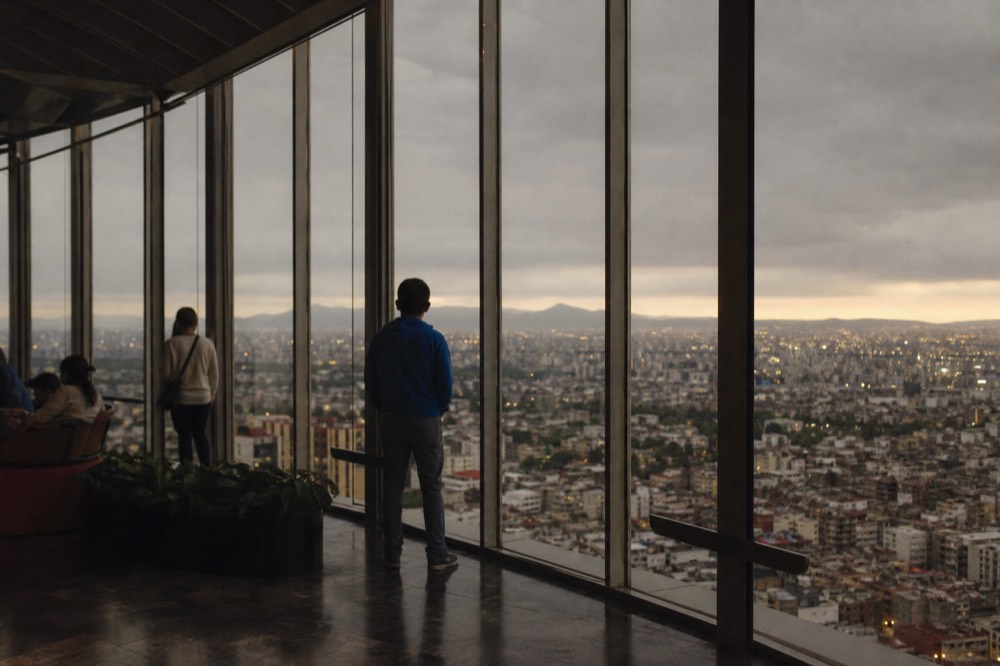
Go up the Torre Latinoamericana at dusk. The 1950s tower has an open-air observation deck and glassed mirador over the Centro Histórico, open every day, and the view as the lights come on over the valley is the right way to close a museum day. It is an observation deck rather than a museum, so treat the ticket as buying the view.
After a day at ground level among stone and murals, the Torre gives you the whole thing from above. From the top you look down onto the Palacio de Bellas Artes and the Alameda, across the Centro to the cathedral and the Zócalo, and out to the ring of mountains around the basin. Late afternoon into dusk is the sweet spot, when the air is often clearer than midday smog and the city starts to light up. It sits a two-minute walk from Bellas Artes, so it slots onto the end of the Centro afternoon without any extra travel.
Because it never closes, the Torre is also the natural fallback if your day slips off schedule or if you are stuck on a Monday when the museums shut. You can check the deck and hours on the Torre Latinoamericana observation deck page. If a Monday is the only day you have, our guide to the museums that open on Mondays rebuilds the day around what stays open.
If a sunset slot is full or the sky is hazy, the view holds up through the evening as the city lights come on, so a later visit is a fine plan B. Just steer clear of the deep-smog window of a still, dry afternoon, when the far mountains vanish into haze. On a clear evening, few city views anywhere pay off a day of walking as neatly as this one does.
| Centro Histórico stop | Walk to next | Cost |
|---|---|---|
| Templo Mayor | ~5 min to Palacio Nacional | ~210 MXN (~$10.50) foreigner |
| Palacio Nacional murals | ~10 min to Bellas Artes | Free with a photo ID |
| Palacio de Bellas Artes | ~2 min to the Torre | ~95 MXN museum; lobby free |
| Torre Latinoamericana | End of the day | Deck ticket (~$17) |
What if you want a slower day, or only have a Monday?
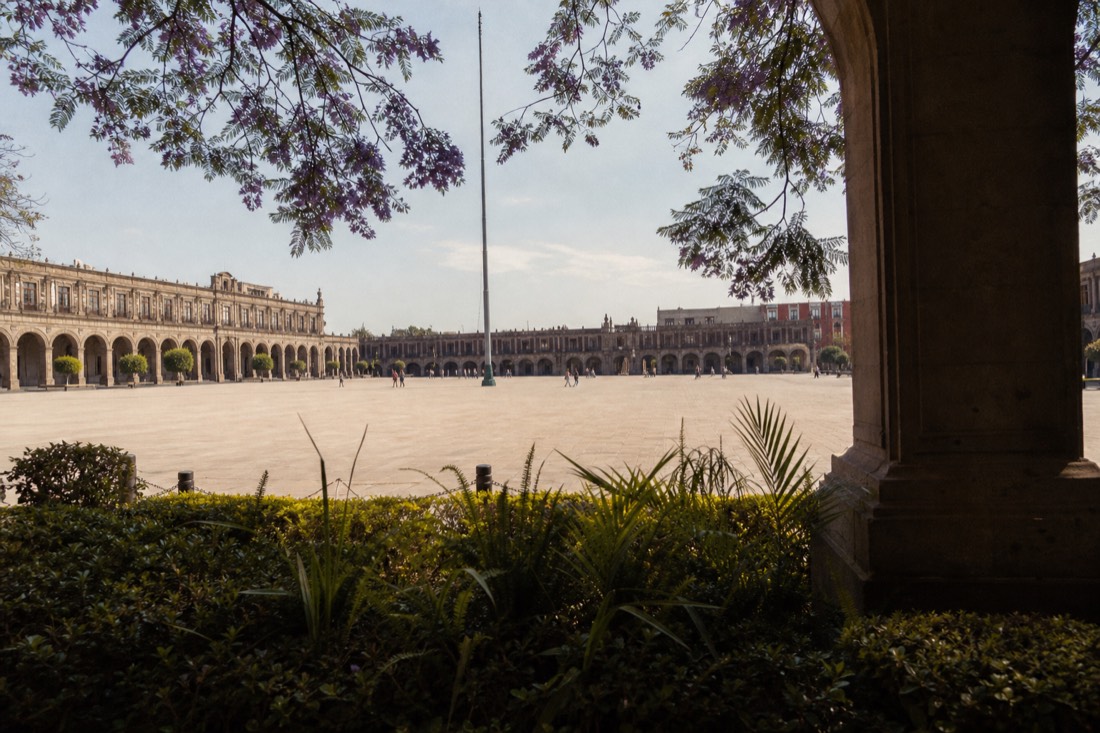
Pick one cluster and go deep. A Chapultepec-only day gives the Anthropology Museum its full three to four hours plus the castle, MAM and the Tamayo. A Centro-only day threads Templo Mayor, the Palacio Nacional murals, Bellas Artes and MUNAL at a stroll. If your one day is a Monday, drop the museums and build around the Soumaya, the Torre and the Estanquillo.
The relaxed alternatives are honestly the better trip for a lot of people. If you love a single subject, spend the whole day on it: the Chapultepec-only day lets the Anthropology Museum breathe and adds the free-Sunday MAM and Tamayo if your day falls on a Sunday, while the Centro-only day keeps you on foot around the Zócalo and the Alameda with no transfers at all. Neither leaves you glancing at your watch. The three ready-made days below cover the common cases.
The Chapultepec-only day looks like this: the Anthropology Museum from opening until around one, a slow lunch, then the castle in the afternoon, with the Museo de Arte Moderno or the Tamayo added if you have energy and, on a Sunday, free entry for everyone at those two. The Centro-only day threads Templo Mayor, the Palacio Nacional murals, Bellas Artes and MUNAL entirely on foot, ending at the Torre, and never once puts you in a car. Both are gentler than the full route and, for a lot of people, more memorable.
A Monday needs its own plan, because the ticketed museums are shut. On that one day, the free Museo Soumaya, the Torre view and the free Museo del Estanquillo carry you, plus a walk through the Centro or Coyoacán. If you would rather push the museum day to Tuesday and use a pass or a combo, our breakdown of how tickets and passes actually work shows why paying per museum almost always beats a pass for a single day.
| Ready-made day | Route | Best for |
|---|---|---|
| Full day, both clusters | Anthropology, castle, then Centro and the Torre | Seeing the most in one day |
| Chapultepec only | Anthropology in full, castle, MAM, Tamayo | Going deep, less walking |
| Centro only | Templo Mayor, Palacio Nacional, Bellas Artes, MUNAL, Torre | A car-free, all-walking day |
| Monday fallback | Soumaya, the Torre, Estanquillo, a neighborhood walk | When the big museums are closed |
The version of this day that people rave about afterward is almost never the one that ticked the most boxes. It is the one where the Anthropology Museum got its time, lunch was not rushed, and the Torre view landed at exactly the right moment as the city lit up. Aim for that rhythm, not a record.
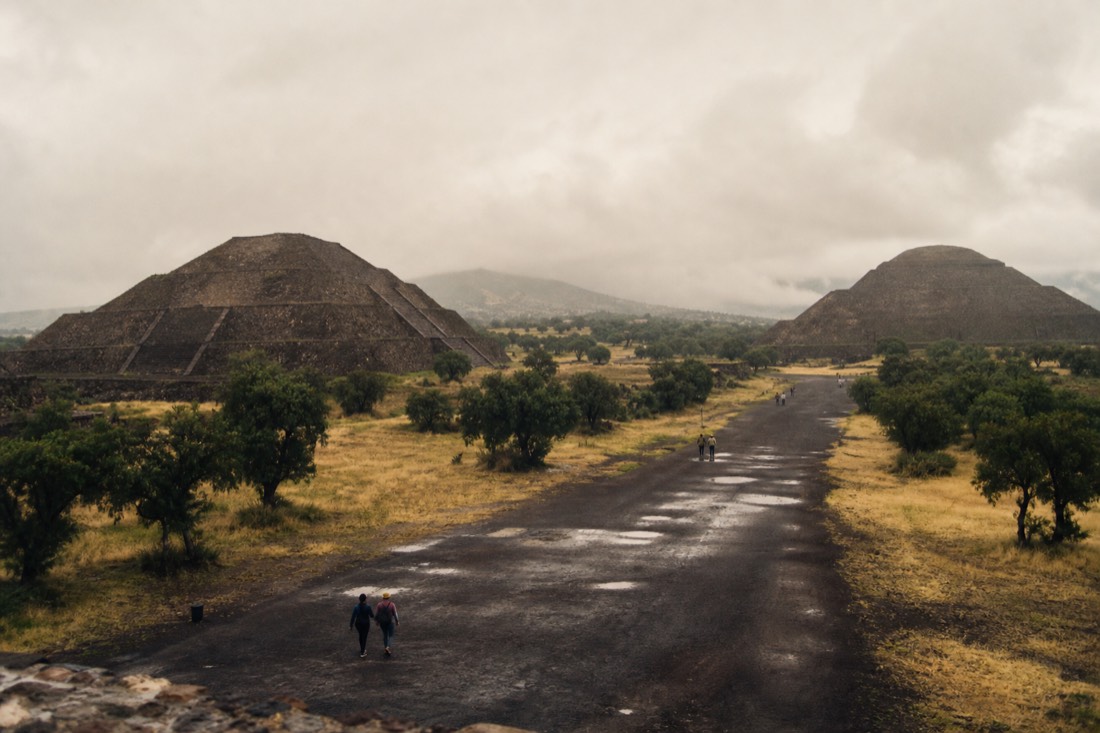
A last honest word on expectations. One day will not let you know these museums, only meet them, and for a first visit that is plenty. You leave with a shortlist of the ones that actually pulled at you, whether the Mesoamerican halls or the view from the Torre at dusk, and a good reason to come back for the rest another time. With a second day in hand, a full day at the Teotihuacán pyramids is the natural step beyond the city.
If you take a single rule from this, let it be the clustering. Spend your morning in one place and your afternoon in another, keep the transfers to one clean hop, and never fight the Monday closures. Do that, and one day is enough to feel like you actually met the city rather than chased it.
Match The Day To Your Plans And Compare Costs
Editorial starting point. Confirm your party's age, access needs and departure details on the listing.
Anthropology Museum Guided Tour: Museum admission; Professional guide Not included: Food and drinks not promised 2.5 hours
Mexico City, Anthropology Museum Tour Summary: private guide; museum ticket Not included: transport not stated as included 2.5 hours
EXCLUSIVE TOUR Chapultepec Castle - Small Groups: live guide; castle admission and permanent exhibitions Not included: transport; other attractions 2 hours
Templo Mayor Tour, Mexico City: Aztec Ruins & Museum: Presential Guide; All Fees and Taxes; Access to the Archaeological Zone and the Museo del Templo Mayor Not included: Tip 2 hours
Viewpoint Torre Latino Panoramic view of Mexico City: Observation deck admission; VAT Not included: Food and drinks 1 hours
Soumaya Museum: the Master of Mexican and Western Art: bilingual guide Not included: food; transport 2.5 hours
Compare Your Actual Quotes
Use the same currency for both totals, including transport, admission and guide fees. This compares your quotes, not live prices.
Compare what each total includes: admission, a guide, transport and time arranging reservations.